
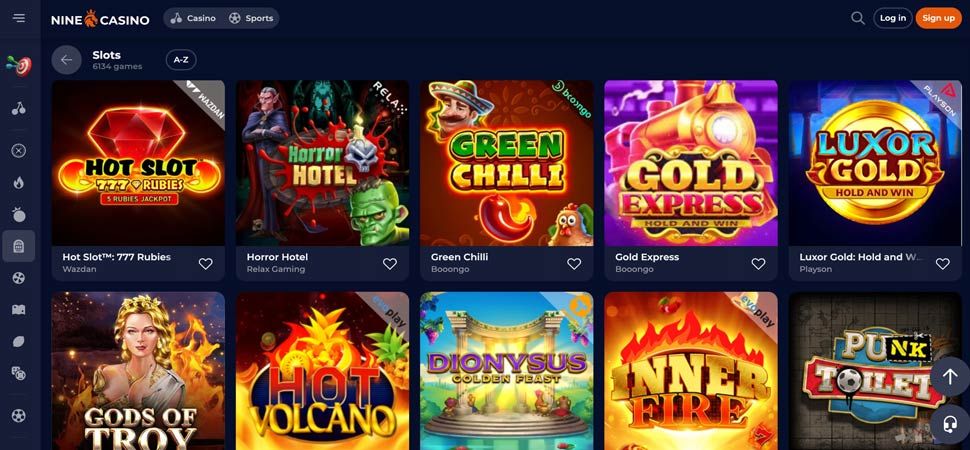
I started looking into Nine Casino after noticing the name show up repeatedly in forums and search results where UK-based players were asking whether the platform held a British licence. The site operates on a ninescasino.eu domain, a detail that straight away indicates it doesn’t target the United Kingdom as a primary market. I looked at the website, read the footer small print and searched public regulatory databases to separate fact from guesswork. What I uncovered is simple: Nine Casino does not hold a licence from the UK Gambling Commission. Instead, the operator relies on an offshore permit that has far different obligations. In this article I’ll go over exactly what that means for anyone playing from England, Scotland, Wales or Northern Ireland.
An Examination of the UK Gambling Commission Register
I started my verifications on the Gambling Commission’s online public register, which displays every domestic and remote operator permitted to offer gambling services to customers in Great Britain. Neither the trading name “Nine Casino Game Providers” nor any of the holding companies usually associated to the brand returned a match. The register is updated daily, so a blank result is definitive. I also scanned for common variations and earlier trading titles, but the result was empty. That tells me the operator has never petitioned for, or been granted, a UK remote operating licence.
During registration, UK-licensed casinos must display their licence number prominently on every page footer, alongside a registered address in Britain. I navigated through every key landing page on ninescasino.eu and discovered none of those details. Instead, the footer includes a badge from a completely different regulator. That absence alone is often the strongest signal a casino isn’t regulated by the Commission. For anyone who counts on UK rules to safeguard their balances and personal data, that blank space is important.
Where Nine Casino Actually Holds Its Licence
The footer of Nine Casino cites a Curacao eGaming licence, and I confirmed the seal through the master licence holder’s validation page. Curacao has long been one of the most frequently used offshore jurisdictions in the igaming world. It delivers lower fees, lighter compliance burdens and a one-size-fits-all approach that covers everything from slots to live dealer tables under a single sub-licence. For operators, it’s a flexible, cost-effective route to market. For players, though, the protection layer is less robust.
Unlike the UK system, a Curacao licence doesn’t require operators to segregate customer funds, participate in a statutory self-exclusion scheme like GamStop or follow the same detailed advertising codes. The master licence holder supervises several brands, while day-to-day consumer disputes are often handled internally rather than by an independent ombudsman. I’m not saying the casino is unsafe, but the regulatory framework does not match the standards British players have grown used to seeing from UKGC-backed sites.
The Downsides of Playing Without UKGC Protection
When I evaluate the practical risks, several factors stand out that any would-be player should think about before putting real money at an non-licensed site. The missing of a UKGC permit strips away entire layers of consumer safety that most British players now assume.
- No access to the Gambling Commission’s complaints procedure or independent ADR scheme.
- Player funds are not segregated, implying balances could be at risk if the operator faces financial trouble.
- Self-exclusion through GamStop isn’t available, leaving vulnerable players missing a critical safety tool.
- Promotional terms and withdrawal conditions aren’t audited by a body that upholds fairness standards.
- Identity verification and anti-money laundering checks may not adhere to the same strict UK protocol.
I’m not claiming every offshore casino will misuse customer funds or overlook disputes, but the systemic protections that UK law mandates are not present. In a dispute, you’d be counting on the goodwill of a company registered outside Britain, often lacking a clear path to legal redress. That reality on its own prompts me to recommend that anyone who prioritizes regulatory safety should reconsider before playing at a site that lies beyond the Commission’s remit.
The way UK Regulation Measures against a Curacao Licence
In UK regulation, every operator is required to undergo regular auditing, affordability checks and strict anti-money laundering protocols that are implemented by a statutory body. The Gambling Commission can suspend licences, impose hefty fines and even pursue criminal charges when rules are broken. That enforcement muscle alters behaviour. The Curacao framework, on the other hand, relies heavily on the master licence holder’s willingness to step in, and past cases show that consumer recourse can be slow or limited.
I also noticed the difference in responsible gambling tools. UK casinos must offer deposit limits, reality checks and direct links to GamStop suspension, all verified by the regulator. At Nine Casino I found some manual account limits available upon request, but no mention of integration with the UK’s centralised self-exclusion system. That gap alone makes the experience fundamentally different for anyone who wants the safety net British regulation provides.
Regulatory Access for UK Players
It is not against the law for individuals in the United Kingdom to register at a Curacao-licensed casino like Nine Casino. The present regulations puts the responsibility on the operator, not the player. An offshore site can’t legally advertise or directly offer its services in Britain without a UKGC licence, but there’s no criminal penalty for a resident who voluntarily signs up. I’ve noticed numerous British players access the site without using a VPN, and the platform handles sterling deposits through common UK payment methods. The experience works, even though the regulatory environment around it was not created with British consumers in mind.
How to Spot a UK-Licensed Casino
As the appearance of a gambling site rarely reveals anything about its regulatory status, I invariably depend on a few practical checks that require less than two minutes. These steps will instantly tell you whether an operator is licensed for UK customers.
- Navigate to the very bottom of any casino page and look for a licence number that begins with a 5‑digit code, which is typical for UKGC operators.
- Access the Gambling Commission’s public register and input the brand name or the licence number to check the entry is live.
- Ensure that the casino’s terms specifically mention the Gambling Commission and not only a corporate entity registered in an offshore territory.
- Check that GamStop integration, deposit-limit tools and links to UK responsible gambling charities are built into your account dashboard.